



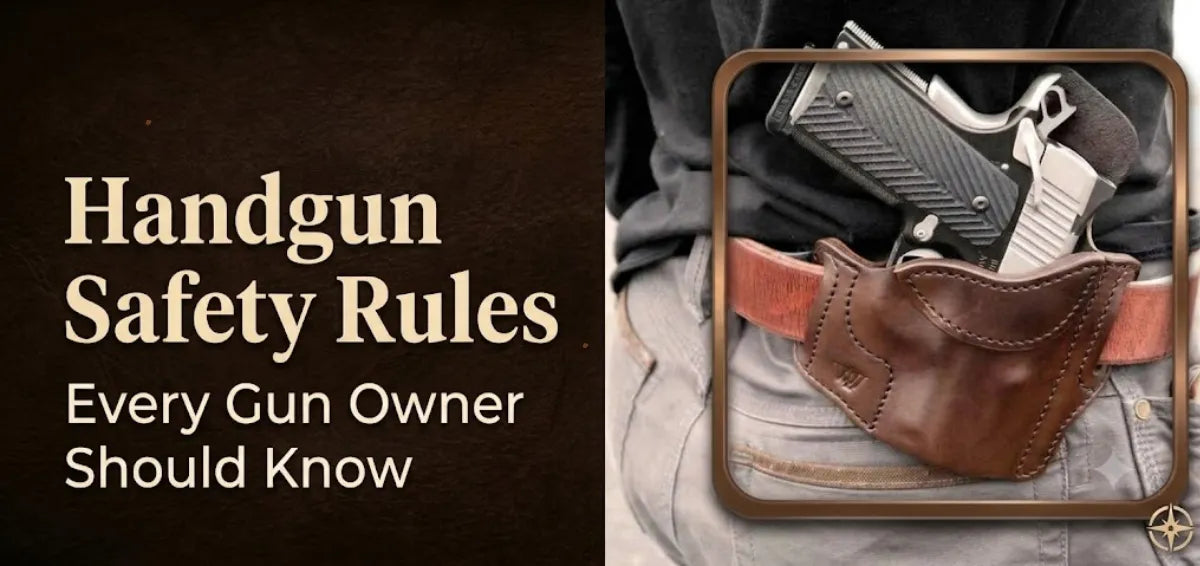

Owning a handgun is a significant responsibility, whether you carry it for self-defense, shoot for fun, or use one at work. Good habits help you minimize unnecessary risks and protect the people around you.

Handgun safety is about more than memorizing a few rules. You need to make the right decision every time you store, carry, clean, and use your handgun. Combined with high-quality equipment and continuous practice, these habits become automatic and help you remain a responsible gun owner.
Why Does Handgun Safety Matter?
As a responsible gun owner, preventing accidents is a top priority. Practicing safe handling keeps you, your family, and those around you safe, and it reinforces responsible firearm ownership.
Applying these methods also increases your confidence, whether you are shooting at the range or carrying during daily tasks.
What Are the 4 Universal Rules of Gun Safety?
These four rules should always be followed, no matter the model or condition of the firearm:
- Treat every handgun as if it is loaded.
- Never point the muzzle at anything you are not willing to destroy.
- Keep your finger off the trigger until you are ready to shoot.
- Know your target and what is behind it.
How to Handle a Handgun Safely?
Safe handling begins the moment you first touch the firearm. A consistent routine builds confidence and reduces careless errors.
Check If the Handgun Is Loaded Before Handling
Never assume a handgun is unloaded, even if someone else has already checked it. Always confirm its condition yourself while keeping the muzzle pointed in a safe direction. This builds a habit that helps you avoid unnecessary risks.
Practice Safe Loading and Unloading
Load and unload using the procedure specified by the manufacturer. Do not let yourself become distracted; work slowly and deliberately while keeping control of the firearm at all times. When it comes to safety, taking your time beats rushing.
Keep Your Finger Off the Trigger Until Ready to Shoot
Keep your trigger finger outside the trigger guard until you have aimed and are ready to fire. This habit helps prevent a negligent discharge.
Follow Proper Range Etiquette
Every range has rules that protect all users. Follow the range officers' commands, obey all cease-fire orders, and stay aware of what other shooters are doing at all times.
Clean and Inspect Your Handgun Regularly
Regular maintenance ensures safe and dependable function. Clean your handgun using the manufacturer's recommended methods and inspect it for worn components, loose fasteners, built-up dirt, or damage. Routine maintenance improves reliability and helps you catch small problems before they become big ones.
How to Store a Handgun Safely at Home?
Safe storage prevents unauthorized access to your handgun and protects it from damage.
Keep Firearms Away from Children and Unauthorized Users
Store your handgun where children and unauthorized individuals cannot reach it. Limiting access reduces the chance of accidental or improper use.
Store Ammunition Separately and Securely
Unless your situation calls for otherwise, store ammunition in a separate, secure location from your firearm. This helps you keep your gear organized and under control.
Use a Gun Safe or Lockbox
A quality gun safe or lockbox keeps unauthorized individuals away from your firearm and protects it from dust, moisture, and accidental damage. Choose a safe, cabinet, or lockbox that meets your security needs.
Add Trigger Locks for Extra Security
Trigger locks add another layer of security during storage. They help, but they should not be relied on as your only method of securing a firearm.
Store Your Handgun in a Cool, Dry Place
A handgun kept in a cool, dry environment is more likely to stay dependable and hold its condition, especially when you inspect it regularly.
How to Carry a Handgun Safely?
Carrying safely comes from dependable equipment paired with consistent habits. Your setup should also be comfortable enough for everyday carry, so you carry safely and consistently.
Choose a Holster with Proper Trigger Protection
Choose a holster that fully covers the trigger guard and is made specifically for your handgun. A proper fit helps keep the firearm secure during all normal activities.
Pick a Secure Carry Position
Select the carry position that is most comfortable, concealable, and stable for you. The right position lets you carry your handgun confidently and safely.
Use a Strong Gun Belt for Better Stability
A good gun belt supports the weight of the gun and holster, reduces unwanted movement, and improves comfort when you carry for long periods.
Check Holster Retention Before Carrying
Before you carry, confirm the holster grips the firearm firmly. With the firearm unloaded, hold the holster upside down and shake gently; the gun should not shift or fall out. Re-check retention periodically, especially as a leather holster breaks in.
Practice Safe Drawing and Reholstering
Practice drawing and reholstering in a controlled environment, ideally with an unloaded firearm. Move slowly and deliberately to build confidence and reinforce safe handling.
Common Handgun Safety Mistakes to Avoid
Most firearm-related injuries come from human error rather than mechanical failure. Never assume your handgun is unloaded, never skip regular maintenance and inspections, and never handle your firearm carelessly. Keep your finger off the trigger until you have made the deliberate decision to fire, and never allow unauthorized access to an unsecured firearm. The best way to reduce these incidents is to practice safe handling consistently.
Final Thoughts
Firearm safety is a lifelong practice you should demonstrate every time you handle, transport, or store a firearm. When you combine quality equipment with consistent, safe habits, the result is a safer environment for you and everyone around you.
A safe carry setup starts with the right gear. Wright Leather Works offers full-grain leather holsters with full trigger-guard coverage and premium gun belts - like the Old World Gun Belt - built to hold your firearm exactly where it belongs. Browse our Holsters and Belts collections.
Frequently Asked Questions
What is the most important handgun safety rule?
No matter what firearm you are handling, always treat it as if it is loaded. This mindset reinforces every other firearm safety rule.
How should a handgun be stored safely?
Store it in a secure location - such as a gun safe or lockbox - away from children and unauthorized users.
Should you store a handgun loaded or unloaded?
Follow all local, state, and federal laws regarding possession and safe storage, along with the manufacturer's recommendations. Balance those requirements with your own needs while ensuring the firearm is protected from unauthorized access.
How often should you clean your handgun?
Check your handgun regularly for function and cleanliness, and always follow the manufacturer's maintenance instructions.
What is the safest way to unload a handgun?
Use the manufacturer's unloading procedure and keep the muzzle pointed in a safe direction the entire time.
How can you prevent accidental discharges?
Follow the universal firearm safety rules, use a quality holster, maintain your handgun properly, and handle it safely every time you carry or use it.





Leave a comment (all fields required)