





One of the most crucial matters you will encounter if you are carrying concealed or thinking about doing so is the location of your firearm. The holster's position decides how comfortable you will be, how quickly your gun will be accessible, and how well it will be concealed, which is what actually matters when you are using gear from Wright Leather Works that is made for “Concealed • Confident • Comfortable.”
This article reveals the various concealed carry positions. It is to assist you in determining what fits your body, clothes, daily life, and holster. U.S. carriers will find it applicable for different situations: office, errands, and going out.
On-Body vs Off-Body: the first split
Knowing the types of carry in a broad sense is quite possible that the gun could be either on-body or off-body.
On-body carry means you are literally carrying the firearm on your body, which could be a holster clipped or attached to you through a belt, waistband, harness, etc.
Off-body carry means the gun is in your possession, such as in a bag, purse, or briefcase, but not directly attached to your body.
Although off-body carry is an option, a majority of the concealed-carry practitioners prefer on-body carry as it always has the gun with you. It minimizes the risk of it being out of reach or taking time to access.
The primary focus of this article is on-body carry positions, as that is where a custom holster from Wright Leather Works really excels.
Inside-the-Waistband (IWB) Positions
The term inside-the-waistband, or IWB, refers to a type of holster placement wherein the holster is positioned inside the pants, occupying the space between the body and the pants/waistband. This method is usually preferred for concealed carry as it provides the best possible concealment.
Among the various IWB positions, here are the most frequently used (consider your body as the face of a clock: belly button = 12:00, back = 6:00).
12 o’clock (front center)
- Situated directly under your belly button.
- Ideal for longer guns (they sit in front).
- Good for those who spend a lot of time sitting, as it adds less pressure to the hip.
- Downside: may be visible more through clothing, plus getting access to the gun will necessitate reaching over the belt line.
Appendix (1-2 o’clock, right-hand draw)
- Located at the front of your body, just to the right of the center if you are right-handed (left of center for left-handed).
- Extremely accessible and fast to draw.
- It can be uncomfortable when sitting; the direction of the muzzle is a safety issue; concealment may be more difficult for certain body types.
- If you choose this one, you definitely need a holster from Wright Leather Works that has the right trigger guard coverage and comfort.
Kidney carry (4-5 o’clock)
- Located right behind your hip (for right-hand draw, it is 4-5 o'clock; for left, 4-5 o'clock-mirror).
- The IWB (Inside Waist Band) placement is usually one of the more comfortable ones since it is in line with the belt and not pressing against the body.
- Drawing can be intermediate since the body may cover a part of the grip. For bigger guns, this may not be enough.
Small-of-Back (5-6 o'clock)
- It is located at the center of the back, precisely at the small of your back.
- Usually, the concealment is easy, as it is behind you. However, this position gets discouraged by most experts because of its security and accessibility problems:
- Risk of spinal injury due to falling backwards.
- Drawing in different positions may be difficult.
Unless you have a specific reason and proper training, many instructors for carrying suggest considering alternatives.
Cross-Draw (10-11 o'clock)
- The holster goes on your non-dominant side, between the hip and navel, and you draw across the body.
- It may be an odd choice for everyday carry; however, it has niche applications (e.g., sitting position for the driver).
- Caveats: you have to practice drawing safely (muzzle awareness), and also adjust the angle (cant) of your holster for comfort and access.
Outside-the-Waistband (OWB) Positions
OWB, or Outside the Waistband, is an open carry method, and in this case, the holster is placed on the outside of your pants and belt. This trendy way of carrying is almost universally accepted among open carry practitioners. Nevertheless, some concealed agents use this method when their clothing and figure permit.
Pros: being usually more comfy, drawing is easier to do.
Cons: less concealment, possible requirement for looser or heavier clothing, or an outer cover.
Major OWB locations:
Strong-Side (3 o’clock for right-hand draw) is the most common place for many police officers. Withdrawal is instantaneous. However, concealed carry efficiency is largely dependent on outerwear, especially for concealment.
Kidney (4-5 o’clock)
With OWB, this spot can be easier to disguise than the strong side 3 o’clock if you dress smartly.
Small-of-Back (5-6 o’clock)
The same criticisms apply: accessibility and safety can be problematic. Many instructors caution against using it without excellent skill and context.
Cross-Draw (10-11 o’clock)
It could be useful behind a desk, in a vehicle, or if your build/waistband makes other positions uncomfortable. Must practice.
Pocket, Ankle, and Other Carry Methods
Besides, there are different concealed-carry positions to familiarize yourself with, and especially for your wardrobe, climate, or body type, the common waist-carry spots may be out of the question.
Pocket Carry
- A handgun is usually positioned in a pocket holster in the front pocket. It is used for small-frame guns.
- Pros: It is almost invisible; only a few gears are needed.
- Cons: slower draw; only small firearms are allowed; might get moved around during movement.
Ankle Carry
- A small pistol is holstered around the ankle inside pants or boots. Good for backup carry.
- Pros: hidden and surprising position; useful when sitting or standing in certain contexts.
- Cons: slow draw; limited to small guns; not ideal for fast access or in cramped seating.
Belly Band / Bra / Purse / Off-Body
Belly-band holsters wrap around your torso; bra holsters are female-centric options; purse or bag carry counts as off-body.
Good for clothing flexibility, but each has trade-offs: movement, control, drawing speed, and weapon security must be evaluated.
Selecting Your Ideal Fit
-
Take a look at your body and the way you live your life daily
Choose a carrying position that is comfortable throughout the day, whether you are sitting, driving, or on your feet all day, for if it is not comfortable, you will not carry it at all times. -
Consider your wardrobe and surroundings
Make your carry style to your outfit; IWB is great with tucked-in shirts, while OWB can be easily camouflaged under loose layers or jackets. -
Take access and readiness into consideration
Select a position that allows you to draw smoothly and safely each time, and make it a practice to incorporate it into your routine. -
Use top-notch gear: do not skimp
Get a nice leather holster from Wright Leather Works that is well-made - it will feel better, last longer, and keep you confident and safe. -
Try, assess, and improve
Experiment with various carrying positions until one becomes comfortable and feels natural.
Why Your Holster Matters for Position
For a carry position to be effective, choosing the correct holster is a must. To illustrate, for an IWB appendix carry, one would need:
- One can use a holster that rears the muzzle up safely and is tucked in.
- A sweat shield or backing to protect your body.
- A strong belt clip or straps to keep the holster in place.
For OWB kidney carry, a holster that is snug to the belt, has less printing, and permits the quickest draw will be needed.
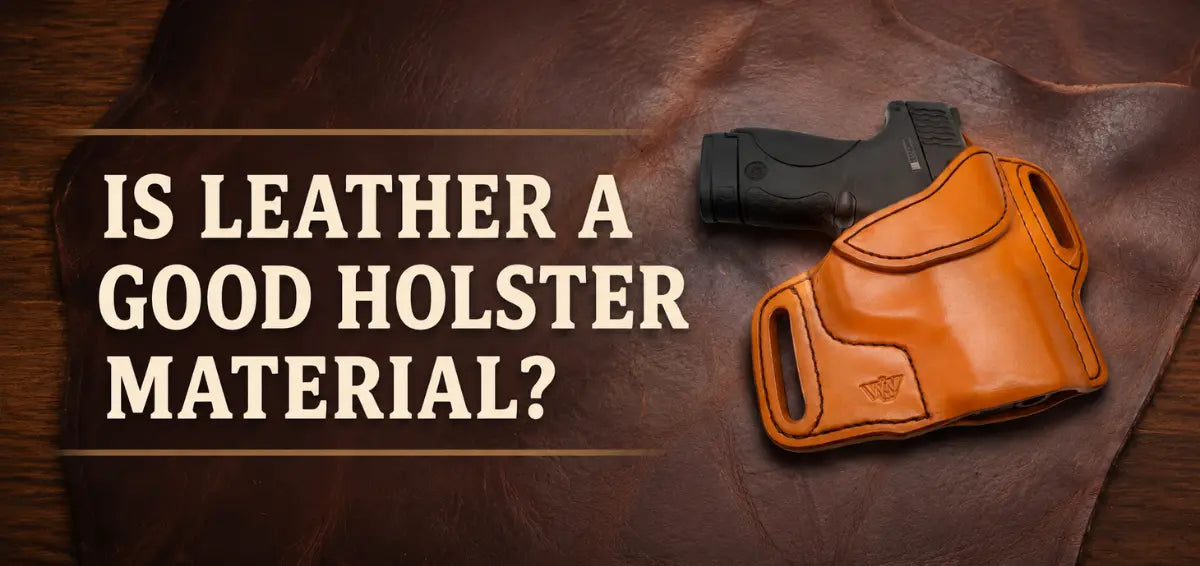
Wright Leather Works uses full-grain domestic steer hides for its holsters and belts; the hides are veg-tanned in the U.S., and each piece is crafted according to specific requirements. Such a custom-styled product adjusts ride height, cant, retention, and comfort for each of the carry methods mentioned above.
Conclusion
Choosing a carry position comes down to personal preference more than anything else. The combination of your carry gun, your body, your daily life, your wardrobe, everything has a say. A well-respected article gives the following advice: “There is no universally ‘best’ concealed carry position. Your needs, lifestyle, body type, and wardrobe will shape what works best for you.”
If you are using Wright Leather Works holsters, then you’re already going to have an easier time getting a comfortable, concealed, and reliable setup. Use that to your advantage. Try IWB, OWB, pocket, and ankle. However, make sure that you have practiced the draw, confirmed that the setup is safe, and you can carry it all day without discomfort or compromising your practice.
After you have perfected your carry position and holster, it is not only the gun that you will be carrying, but also the confidence.
FAQs
1. Which concealed carry position is the most comfortable?
Comfort depends your physique and your daily routine. Gun enthusiasts like the IWB (inside the waistband) kidney carry (around 4-5 o'clock) as it is breathable and friendly during the mentioned activities (walking, sitting, driving).
2. Which concealed carry position is most suited to beginners?
If you are just starting with concealed carry, go for the easy one. The strong-side (3 o'clock) position - either IWB or OWB- will be your best friend as it is easy to reach, train with, and control.
3. Is the appendix carry safe?
Yes, it can be if followed by the right practices. A good holster that covers the trigger guard completely, coupled with appropriate draw and re-holstering, ensures that appendix carry is both safe and effective.
4. What is the most concealed carry position?
The appendix and kidney positions are the ones with maximum concealment under normal clothes. A properly sized leather holster will keep your gun safe and hidden without compromising your comfort.
5. Is off-body carry allowed, like in a bag or purse?
Yes, but it requires additional support. Always keep the gun in a special holster pocket inside your bag and make sure the bag is always within the reach. Off-body carry is most suitable when safety and awareness are prioritized.



Leave a comment (all fields required)