



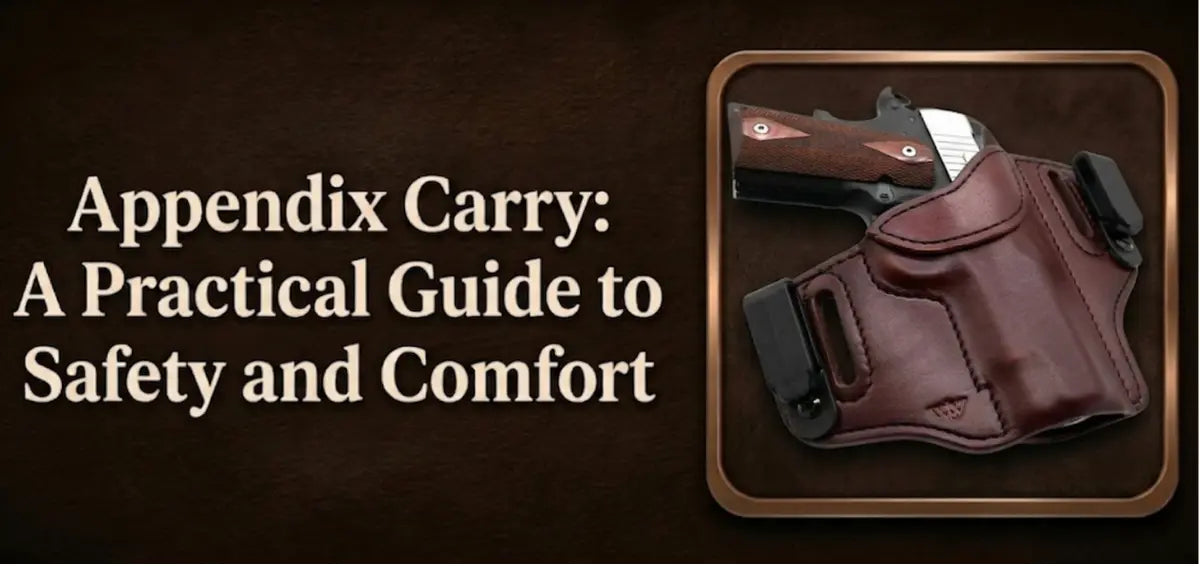

Selecting your concealed carry position is just as important as deciding which gun to carry and what type of holster to use. A comfortable setup makes daily carry easier; an uncomfortable one leads to frustration. That is why appendix carry has become popular with responsible gun owners - it offers strong concealment, easy access, and comfort throughout the day.

Also known as AIWB (Appendix Inside the Waistband) carry, appendix carry lets you carry a holstered firearm at the front of your waistband. Understanding how it works will help you make an informed decision about whether this style suits your lifestyle.
What Is Appendix Carry (AIWB)?
In appendix carry, a concealed carry technique, the handgun is positioned inside the waistband of your pants at the front of the body. A right-handed shooter generally wears the holster around the 1 o'clock position, while a left-handed shooter typically positions it around the 11 o'clock position.
This location keeps the firearm close to the midline of the body, which helps conceal it under everyday clothing. It also makes the firearm easier to access while moving through regular daily activities.
A successful AIWB setup comes from matching the correct holster to your specific handgun model. Proper retention and complete trigger-guard coverage give you maximum confidence and comfort once you have achieved a secure, proper fit.
Pros and Cons of Appendix Carry
Pros
Appendix carry provides an excellent level of concealment because the firearm sits close to the body, making it easy to hide beneath an untucked t-shirt, a jacket, or other casual clothing. Many carriers also prefer this position because the firearm is readily accessible as they move around during the day.
Appendix carry is also very stable. Worn with a properly fitted holster and a good-quality gun belt, the firearm stays in place throughout the day. Because the handgun sits at the front of the body, many people who carry this way stay more aware of where their firearm is when navigating crowded areas.
Cons
Most people are not completely comfortable the first time they try appendix carry. Different body types, gun sizes, and holsters all create a different experience. If your setup feels uncomfortable, adjustments can help - and larger handguns tend to carry differently than smaller ones, especially while seated for long periods.
You may also notice printing, depending on how you have matched your holster and clothing. In most cases, these issues can be resolved with the right equipment and small adjustments to your carry setup.
Who Is Appendix Carry Best For?
This style is especially popular among everyday concealed carriers who are typically on their feet and moving between activities throughout the day.
Compact and midsize handguns are the most common choice for AIWB. That said, many people carry larger firearms without difficulty, as long as they use a well-designed holster that properly supports the firearm.
Your final choice will come down to which method best fits your body, your routine, and your comfort level.
Is Appendix Carry Safe?
Appendix carry can be safe when you use quality gear and practice responsible firearm handling. Keep these critical points in mind:
- Use a holster with full coverage of the trigger guard.
- Use a holster made specifically for your firearm, not one intended for other models.
- Choose a holster that holds the firearm securely and keeps it in place during normal daily activities.
- Inspect your holster at least once a month for wear, loose parts, or damage.
- Practice safe handling every time you load, unload, or handle your firearm.
- Carry with quality equipment that is well maintained and in good working order.
Position alone does not determine whether you are carrying safely - responsible habits matter more than the carry position itself.
How to Make Appendix Carry Comfortable?
Comfort usually comes down to a few simple adjustments rather than changing your entire carry system.
Match Your Carry Position to Your Body Type
Overhauling your whole setup can feel daunting, but it is rarely necessary. Minor adjustments to position and angle usually deliver the comfort you are after.
Adjust Ride Height, Cant, and Gun Size
No two people share the same body shape, so make small adjustments to your holster's position until it feels comfortable and conceals well.
Reduce Printing for Better Concealment
Choose an appendix carry holster that pulls the grip close to the body to reduce printing and improve concealment. A good belt-and-holster combination adds stability and reduces shifting over the course of the day.
Choose the Right Clothing for Concealment
Loose-fitting clothing generally conceals better than tight, fitted clothing. A good gun belt keeps the firearm stable and spreads its weight for maximum comfort and concealment.
How to Choose the Right Appendix Carry Holster?
When you want an AIWB setup that feels great and works well, the holster is your starting point.
Check Trigger-Guard Coverage
Always choose a holster with full coverage of the trigger-guard area. This is one of the most critical safety features on any concealed carry holster.
Choose the Right Holster Material
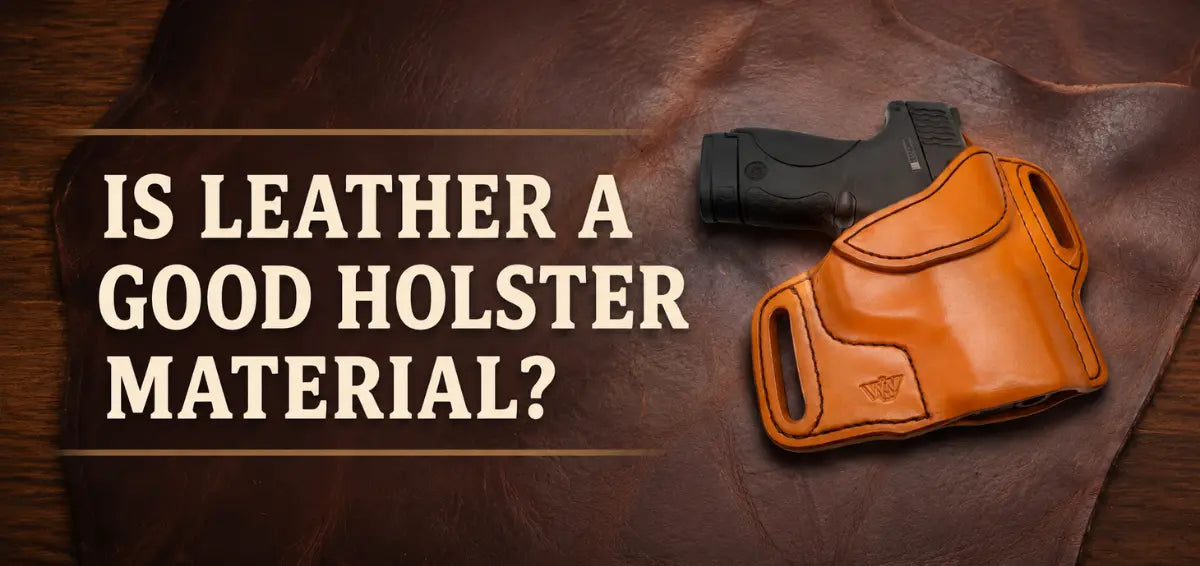
Over the years, leather has become synonymous with comfort because it breaks in and conforms to you as you wear it. A premium leather holster is a reliable, long-lasting carry solution with a timeless, traditional look that wears well every day.
Match Your Gun Size and Carry Style
Leather holsters offer an exceptional fit because they are molded specifically for each firearm model. That precise fit delivers better retention, improved comfort, and more consistent performance throughout the day.
Consider Claws and Wedges
Claws and wedges pull the grip of your firearm closer to your body in an appendix carry holster. This reduces printing and helps you conceal your firearm more effectively.
Look for Comfort Features
Many factors affect comfort and reliability, including quality stitching, smooth edges, adjustable retention, and overall durability. Investing in a well-made holster pays off in day-to-day comfort and long-term reliability.
Final Thoughts
For many responsible firearm owners, appendix carry remains one of the most effective ways to carry concealed. The combination of strong concealment, easy access, and a natural fit into daily life makes it one of the top choices today.
Finding the right mix of firearm, holster, and carry position may take some trial and error - but the payoff is a setup you will actually carry every day.
Ready to build your AIWB setup? Wright Leather Works® handcrafts full-grain leather IWB holsters molded to your specific firearm, with claw and wedge options through our Crux Concealment System. Explore our IWB Holsters collection to carry Concealed, Confident, and Comfortable.
Frequently Asked Questions
Is appendix carry safe for everyday concealed carry?
When used with a quality holster that fully covers the trigger guard and holds the firearm securely, appendix carry can be a safe way to carry every day. Safe firearm-handling practices should always remain your primary focus.
Is appendix carry comfortable while sitting?
For many people, yes - though it depends on your body shape, the size of your firearm, your holster's design, and where you position it on your body.
Can you use a leather holster for appendix carry?
Absolutely. A quality leather appendix carry holster is comfortable, reliable, and long-lasting. Choose one made specifically for your firearm model.
What size gun works best for appendix carry?
Compact and midsize handguns are popular for their balance of comfort and concealment, but the ideal size depends on your body type and clothing.



Leave a comment (all fields required)