



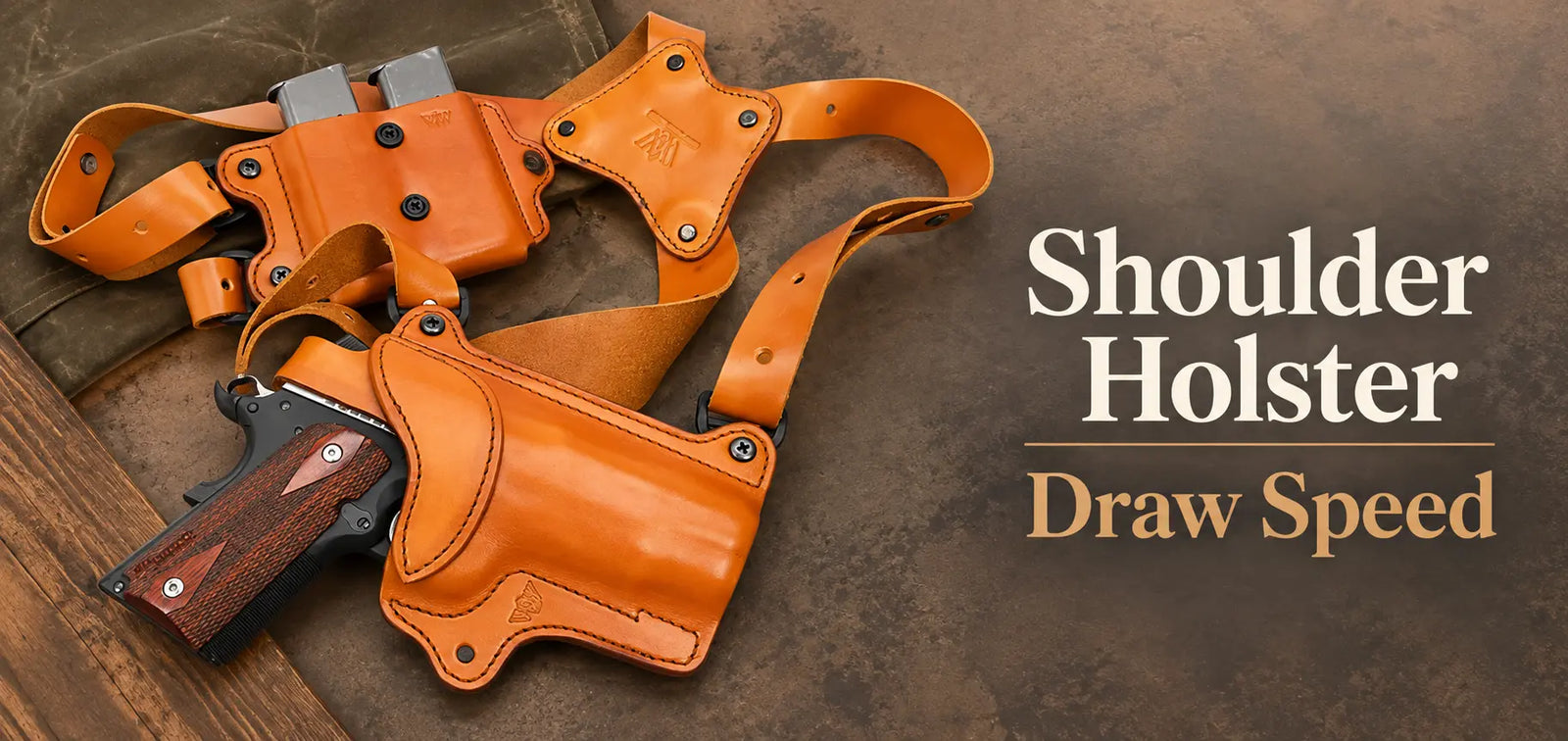

Shoulder holster draws are a different way from hip holsters and inside-the-waist (IWB) holsters; instead of pulling the gun out from the waistband, the user draws it from somewhere near the torso with a cross-body motion. Depending on the situation, drawing the weapon this way can feel natural or not very practical.
Safety should always be the foremost consideration during the process of evaluating or practicing how to draw a weapon with a shoulder holster. The holster should properly fit the gun to ensure that it is kept safe behind the trigger.
Shoulder Holster Draw Speed at a Glance

| Factor | Effect on Draw Speed |
| Carry position | Decides the accessibility of the firearm |
| Holster orientation | Horizontal and vertical designs create different draw paths |
| Retention | Proper handling leads to longer retention |
| Clothing | Clothing options like jackets and outerwear will either help or interfere with accessibility |
| Firearm size | Firearm size will determine the movement for comfortable access |
| Holster adjustment | Proper positioning is necessary for a quick draw |
| Body type | Proper fit is determined by the shoulder width, torso length, and arm reach |
| Training | Consistency and efficiency can be improved with training and familiar setup |
| Seating position | For seating position, shoulder carry is a good option |
| Safety | In terms of safety, trigger protection and muzzle awareness should always come first. |
Why Shoulder Holsters Draw Differently Than Hip or IWB Holsters?
A shoulder holster secures the gun on the upper torso instead of the hip. Depending on the model, the gun rests either completely or partially underneath the armpit with the handle facing at a specific angle.
Whereas in the case of the hip or IWB holsters, the hand usually moves downwards toward the waist, accessing the firearm from the shoulder holster involves the hand moving in the opposite direction or across the torso.
The Cross-Body Draw Motion, Explained
The shoulder holster draw technique usually involves the action of drawing the firearm from the holster crosswise. In this case, the person draws the firearm located under the opposite arm and grabs the grip through the fabric of the clothing.
Why Muzzle Direction Matters More With a Shoulder Rig?
Using a shoulder holster requires you to be especially conscious of muzzle direction, since the gun is positioned differently.
Improperly designed or fitted shoulder holsters may result in gun positioning that becomes dangerous to the user and anyone nearby at the time of use. This is why it is important to use properly designed products and receive proper training in their use.
How Shoulder Holster Draw Speed Compares to Hip Carry?
Hip carry and shoulder carry have slightly different access methods, and so one simply cannot be generally considered faster than the other without an understanding of how users will actually be using it.
To some people, their hip holster feels more natural, so it might be faster for them. For others, their shoulder holster will have a more accessible position with seat belts, desks, or baggy clothing impeding them.
Horizontal vs. Vertical Shoulder Holsters: Which Draws Faster?
| Feature | Horizontal Shoulder Holster | Vertical Shoulder Holster |
|---|---|---|
| Firearm orientation | Grip high, barrel points rearward | Grip lower, barrel points down |
| Draw movement | One natural sweep across the chest | Up-and-out, then rotate onto target |
| Concealment | Prints more easily | Hides cleanly under a jacket or coat |
| Muzzle considerations | Sweeps behind you on the draw - needs extra discipline. | Points at the ground; easier to keep safe. |
| Comfort | Spreads lighter guns across the shoulders | Carries heavier guns better all day |
| Draw speed | Generally quicker for small-to-medium guns | A touch slower, but smooth with practice |
| Best choice | Fast access to a smaller carry gun | A larger gun with better concealment |
When a Shoulder Holster Is Faster Than Hip Carry
Shoulder holsters offer an advantage in certain situations compared to other types of holsters, because they may be more accessible in a number of situations compared to other types of holsters. This does not mean shoulder holsters are superior in speed to all rival types of holsters.
Seated Draws
People who spend a lot of time in a sitting position might find shoulder holsters more comfortable because they don’t connect with an object such as a chair, waistband, or seat. A hip holster can actually get in the way of sitting, while a shoulder holster is out of the way.
Vehicle Draws
Carrying a firearm on the shoulder is often chosen by people who spend much time in cars. The position of a firearm may sometimes also feel more relaxed because it is far away from the hip and, hence, less exposed to the position of the seat.
Outerwear and Cold Weather
When it comes to outer layers of clothing like jackets and coats, shoulder holsters seem to fit pretty well. In cold climates, you may choose to wear many layers of clothing, which can reduce the comfort of carrying in a hip holster.
How Retention Affects Shoulder Holster
Draw Speed Retention is an essential aspect of holster design since it is necessary to keep the gun secured during movement.
Passive Friction
Passive retention uses the fit of the gun in the holster and the friction between them to retain the firearm. Different designs result in different levels of resistance.
Thumb Break
Certain shoulder holsters made from leather utilize a thumb-break strap on the firearm. This gives it an extra measure of retention. However, the trade-off for such loss may be derived from having better retention, which helps in securing against gun possession misuse or loss.
Holster Position and Height
Using a shoulder holster that is worn the wrong way can hamper comfort level and accessibility. Any normal movement can lead to bad adjustment and poor fitting of the gun, preventing one’s fast access to the gun when needed.
Leather vs. Kydex Shoulder Holsters: Does Material Affect Draw Speed?
The properties of Leather and Kydex differ, but material does not solely decide the speed of drawing the weapon.
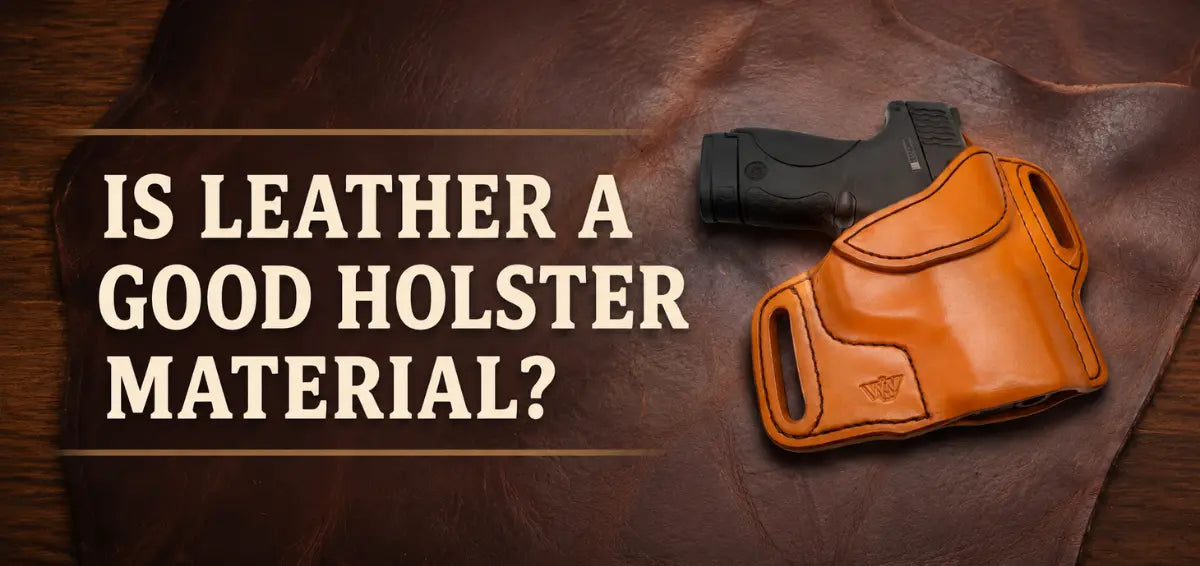
Leather is flexible and can offer traditional aesthetics and a comfortable feeling. Quality leather can also adapt to fit the firearm and its user over a period of time. However, leather requires proper maintenance, especially with respect to moisture absorption and prolonged usage.
Kydex is a hard thermoplastic material that offers good shape retention. Due to its moisture resistance, Kydex is favorable for some types of users.
How to Improve Your Shoulder Holster Draw Speed?
When it comes to performance enhancement, safety and consistency should be prioritized over speed.
Starting with the placement of the firearm, ensure that it is placed in the holster designed for the particular firearm. In addition, the gun should stay put during your normal activity and be safe from the trigger.
It is highly advisable to get professional training if you want to start learning about shoulder holsters. Practice is an important part of the process and should follow your instructor’s recommendations and comply with applicable laws.
Common Shoulder Holster Draw Mistakes That Slow You Down
Clothing
Bulky coats, fitted tops, multi-layered clothing, and badly situated outfits can block access. Consider clothing when choosing any hidden carry setup.
Holster Adjustment
A holster that shifts from place, gives too much height to wear it, or incorrectly locates it may not give good access. A perfect fit is very important for keeping both comfortable and safe.
Firearm Size
A gun that is of excessive weight or size for a shoulder holster will influence comfort as well as mobility. The holster should always be properly matched with the gun.
Retention
Excessive or unsuitable retention affects accessibility. Lack of adequate retention creates its own safety issues.
Body Type
Individuals come in all sizes. One type of shoulder holster may fit easily on one person, but don't expect that this style is going to work for everyone.
Safety Considerations During a Shoulder Holster Draw
Safety must always come first, even when it comes to draw speed.
- The shoulder holster must adequately hold the firearm down to ensure trigger protection. Do not carry the firearm loosely or in the wrong holster.
- Muzzle discipline is important as well. Since the firearm is naturally wired to be carried across the body, you should understand how the muzzle direction shifts depending on the holster.
- Learning to use a shoulder holster should be done through qualified firearms instruction. Training should cover safe handling, knowledge of the law, and appropriate equipment, not just speed.
- Local regulations differ significantly, and you should always check rules on concealed carry, transporting firearms, storage, and where you can carry before taking any action.
Final Thoughts
The answer to the question of how quickly one can draw from a shoulder holster isn’t straightforward. Shoulder holsters can be extremely effective for certain users, especially those who spend a lot of time sitting or regularly wear an outer garment. In other cases, the hip or inside-the-waistband holster might be a more instinctive choice.
Frequently Asked Questions
How fast can you draw from a shoulder holster compared to a hip holster?
There is no measurable time differential. Accessing a shoulder holster and a hip holster requires different movements, and the time to access each can be different from person to person, firearm to firearm, clothing to clothing, and holster to holster.
Is a horizontal or vertical shoulder holster faster to draw from?
Neither is always the quickest method. The different placement of the gun in horizontal and vertical designs requires different motions to access it. In practice, fit, retention, gun size, clothing type, and body type matter more than the design you choose.
Why do shoulder holsters require a different draw technique?
Shoulder holsters hold guns on the upper body instead of the waist. This means that the hand takes a different path to the weapon. Thanks to this different position, muzzle awareness is even more critical when handling the gun.
Can practice make a shoulder holster draw as fast as hip carry?
Even with proper training, you can't guarantee one carry method will be as fast as another. Training should concentrate on practicing safely and effectively, not just on how quickly to do it.
Is a shoulder holster fast enough for self-defense?
Speed is not the only thing to consider when deciding if a shoulder holster is appropriate. The user's safety depends on whether they have the proper permit, proper equipment, enough training, the right gear, and feel comfortable wearing a shoulder holster.
Does a leather shoulder holster draw slower than a Kydex one?
Not necessarily so. Leather and Kydex are different materials, but draw performance depends on the holster's overall design, fit, retention, compatibility with the firearm, and the user's skill.



Leave a comment (all fields required)