

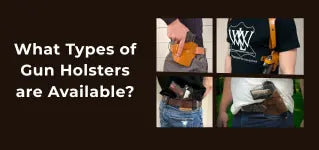

When it comes to selecting the ideal holster for carrying a gun, one has to consider the aspects not only design and comfort, but also security, strengthening the ground that your everyday life is supporting your equipment effectively. The holster is the providing interface through which the gun gets most of the attention. A holster that is not properly chosen can be uncomfortable, give you a bad carry position, or even worse, be a safety hazard.
This blog guides you through the different kinds of gun holsters and, using those characteristics as the criteria, points out the most important factors. Ultimately, the whole procedure of picking a holster type is based on your mode of carrying, fashion, and your way of living. Whether you are a novice gun owner or a seasoned person just evaluating your setup, going back to the basics can always be advantageous.
Why the Right Holster Matters
A holster not only secures your firearm but also for certain functions. One guide points out that there are three main functions a holster provides: to keep the gun secure so it does not shift or slip out, to protect the trigger from accidental access, and to give a draw interface that you can rely on.
In the situation that your holster does not meet any of these criteria, the chance of your gun printing (the gun being visible through the clothing), slow draws, or even accidental discharges is increased. In other words, the holster is an integral part of your carry system and not just an accessory.
Important Features to Consider Before Choosing a Holster
Retention & Safety
Retention refers to the degree of the holster's security for the firearm. The two main types of systems are the passive (friction and moulding) and the active (thumb bails and locking devices). Active retention is typical of duty-carry or open-carry setups.
Fit & Firearm Compatibility
Not only the model of the gun but also any accessories like lights, optics, or suppressor-height sights need to be considered when selecting a holster, as they will change the fit. One source even claims that a mismatch of 1mm may affect retention and draw attributes.
Carry Position, Ride Height & Cant
- Ride height: The position of the gun in relation to your waist; a high position is quicker but difficult to hide.
- Cant: the angle of the gun's grip to your body; the different carry positions (appendix, hip, etc.) require different cant angles.
Carry position affects access, comfort, printing, and how you sit/drive.
Concealability vs Access
Trade-offs are common: a holster that permits lightning-fast access could become a nuisance or cause more printing. On the other hand, ultra-concealable holsters might slow your draw or restrict your movement. It is helpful to know what your essentials are.
The Main Types of Holsters
Among the different types of holsters, some are universally preferred while others are not. Each one has its pros and cons.
Inside-Waistband (IWB)
This kind of holster is placed between your body and pants (or belt) - usually the most popular choice among concealed carriers.
- Pros: Excellent concealability, almost non-visible to the body, and a wide range of placement options to choose from.
- Cons: Might be uncomfortable due to body pressure, some changes in clothing (e.g. wearing a belt or a shirt cover) may be necessary, and sitting for a long time can be painful.
Outside-Waistband (OWB)
The OWB holster is positioned outside the trousers and attached to the belt with a slide, loops, or paddle.
- Pros: More comfortable, faster to draw, and very good for training or open carry.
- Cons: Less concealable unless paired with a jacket or outer garment; prone to printing easily.
Appendix Carry (AIWB)
This is an IWB subcategory where the gun is at a position on the front side of your body (between 12 and 2 o'clock for right-handed shooters).
- Pros: Very often it is the quickest draw for most people, the grip is that good, suitable for sitting or car carry.
- Cons: comfort is highly individual, taking into consideration one's body shape and the type of holster used; the holster should be made for that position to avoid printing or pressure differentials.
Chest Holsters
The holster is set across the chest. It is frequently used in outdoor/backcountry situations, under a backpack or harness.
- Pros: Available when the waist is blocked by the gear (backpack, rig) in off-body carry scenarios.
- Cons: It is usually not the best choice for everyday concealed carry. It could be visible under casual wear; a harness needs to be put in place.
Shoulder Holsters
The Shoulder holster is located under the arm on a harness that goes over the shoulders.
- Pros: Great for situations where one has to drive while sitting, especially if one wears a sports coat or jacket that restricts access to the waist.
- Cons: Access is slow and risky if not properly rigged and trained; printing; it might be perceived as bulky under casual wear.
Ankle Holsters
They are worn around the ankle and are used for backup weapons or especially for the deep concealment of small pistols.
- Pros: very deep concealment, easy to hide; the perfect method for backup use.
- Cons: slower drawing, especially when standing; only good for small-frame guns; comfort and calf/shoe size.
Pocket Holsters
They are designed to fit into a pants pocket with a pistol (usually micro/compact), giving trigger-guard protection and some retention.
- Pros: extremely low profile; many people find them comfortable for casual carry.
- Cons: compatible only with certain clothing (pockets have to be deep enough), only small guns; slower draw than dedicated holsters; probably limited retention, and may be less protective.
Belly Band Holsters
It is a wrap-around band that is worn around the torso (usually under the shirt) and holds a firearm in a flexible position, especially useful when a belt cannot be used.
- Pros: It works well with non-belted clothing (gym shorts, leggings, medical gear) and versatile carry positions (front, side, back).
- Cons: retention may be weaker; it may change with movement; it may need frequent readjustment; it may cause more printing.
Duty / Retention Holsters
These are designed primarily for law enforcement/security and emphasize retention (often Level II or III) as well as open-carry or uniform use.
- Pros: Very high protection, mountable to a duty belt or gear. It isn made for the high-stress or contact environment.
- Cons: Bulky; not suitable for concealed civilian carry; often requires a certain belt or rig system.
Universal Holsters
Tailored to accommodate multiple gun designs instead of being custom-moulded for one only.
- Pros: Cost-efficient, versatile for several firearms or storage/glovebox carry.
- Cons: Very often have to give up on retention, perfect fit, and draw speed; may not be suitable for the primary daily defensive carry.
How to Pick the Right Type for Your Requirement
- Concealed carry or open carry: Maybe you are always driving or spending time outside? Anyway, each scenario puts a different level of importance to the situation.
- Decide on your clothing and movement - If your clothing includes formal wear, jackets, activewear or t-shirts that will not easily hide a holster, that will have an impact on the choice of holster.
- Look at the gun and the extras- A gun with a sight, a flashlight or a big magazine may not allow for certain holsters. Size is important.
- Try the holster on your body- Sit, stand, bend, drive and carry for a couple of hours. Does it show? Move? Hurt?
- Get used to it - A holster is only as good as your comfort and skill with it. Dry-fire drawing, reholstering, and movement drills are important.
Maintenance & Safe Use Suggestions
- Screws, retention adjustments, mounts, clips, or loops are regularly inspected.
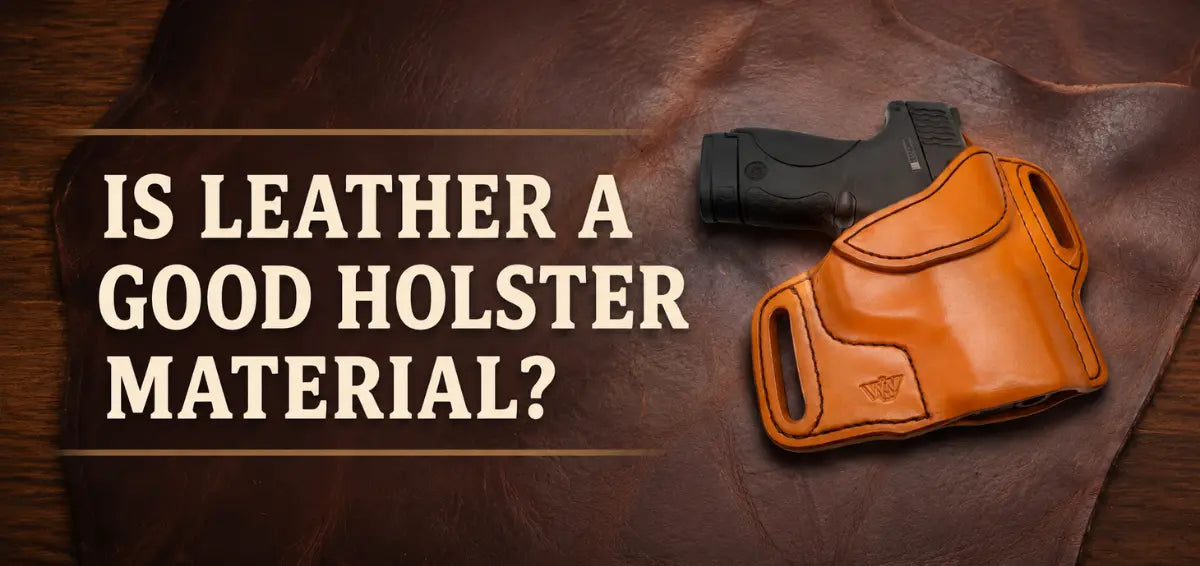
- Kydex or polymer holsters can be washed with mild soap and water; leather should be conditioned to keep it from drying and cracking.
- Always confirm that trigger-guard coverage is still intact.
- Perform draws in situations that mimic your daily carry (seated, with a jacket, etc.).
- It’s not wise to treat your holster as a fashion accessory; always keep efficiency as the main goal.
FAQs
1. What does ride height mean in a holster?
Ride height refers to the vertical distance between your beltline and the bottom of the holster.
2. Is it possible to utilize the same holster for both concealed carry and open carry?
You might be able to use one holster for both cases, but in many instances,s holsters are tailored either to concealment or to open access, not for both.
3. What do you understand by passive and active retention?
Passive retention is a method that depends solely on friction to retain the firearm, whereas active retention applies a mechanical device, like a lock or a strap, to retain the firearm.
4. Can universal holsters be used for everyday carry?
They are functional, but a holster for a particular gun model offers better grip and safety features.
5. What is the holster type that would be best for people who sit or drive a lot?
Appendix, shoulder, or correctly adjusted IWB holsters are the best types of holsters for sitting or driving throughout the day.
Conclusion
The choice of the right holster is fundamental for carrying to be efficient and safe. It is not only a matter of the model or price but also a question of the holster's adaptation to you, your clothing, the movement, the gun and the environment. Knowing about the various types of holsters and what they can provide (and what they can’t) will place you in a good position to make a knowledgeable decision.
If you are trying to find a new holster or reassessing your current one. Then, it would be advisable to select two or three types from the above list, give them a try (if possible). The ideal holster is not the one with the highest price tag or the one with the most features. It is the one that you will carry with the most confidence all the time.



Leave a comment (all fields required)