



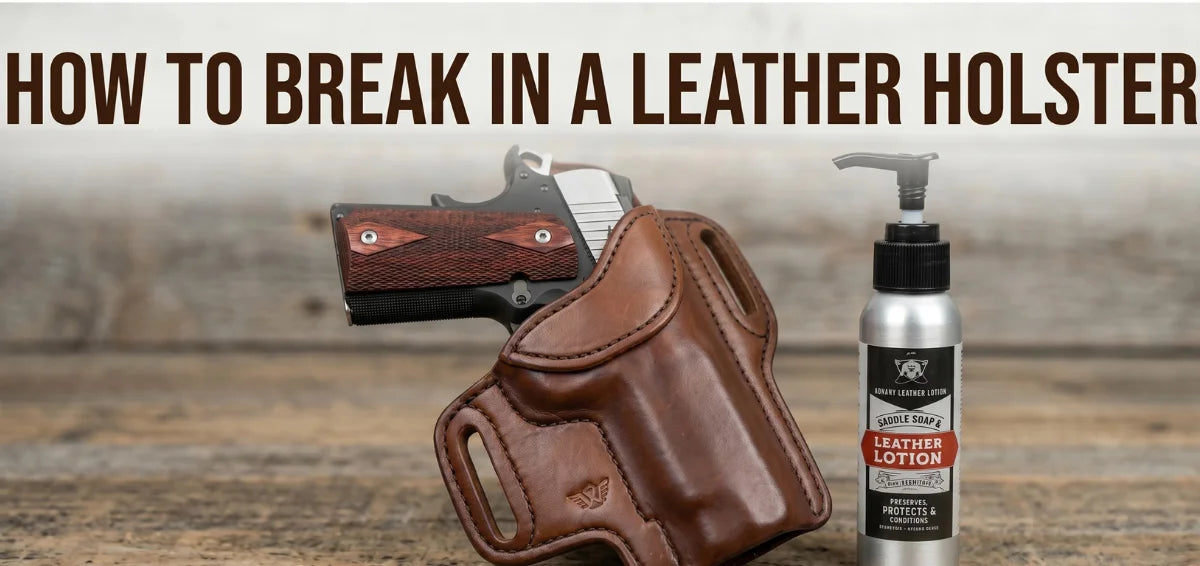

A high-quality leather holster is a classic piece of American carry. Durable, comfortable, and malleable, it adapts to your body’s contours. But when you first purchase one, it can feel uncomfortable, rigid, and just a tad bit too stiff. At times, it feels so tight that drawing and reholstering the firearm becomes a challenge. But, fret not! This is completely normal.
Leather holsters are intentionally made super snug so that they can retain your firearm securely. The key is to know how to break in a leather holster. It is an essential step to ensure a secure, comfortable, and efficient draw. The process, though time-consuming, transforms a stiff, unforgiving piece of leather into a custom-fit extension of your firearm - guaranteeing both retention and accessibility when you need it the most.
Join us as we explore a few safe, proven methods to break in a leather holster without damaging it or compromising the firearm’s safety.
Why Is Breaking In Your Leather Holster So Important?
As we had already hinted, a brand new leather holster, straight from the manufacturer, is usually very stiff and rigid. This hampers its functionality (PS. A rigid holster is indicative of quality material and fine craftsmanship. You can face a few problems, such as -
- Difficulty in Drawing: A tight holster slows your draw speed, which can be a matter of life-and-death in a self-defense situation.
- Retention Issues: The holster may not securely hold your firearm if it is not molded to the right shape.
- Damage To The Firearm:Trying to force your firearm into a tight holster repeatedly results in scratches and wear-and-tear on its finish and aesthetics.
- Discomfort:Lastly, if you do not break a leather holster, it can rub and chafe, making long-term wear quite uncomfortable.
So, long story short, a proper break-in improves draw smoothness, maintains retention, prevents premature leather depreciation, and enhances comfort for daily carry. When you know how to break in a leather holster, you optimize it and also your firearm for performance and maximum safety.
Prerequisites For The Perfect Breaking
Before trying to break in your leather holster, you must be very mindful of the safety measures.
- Unload the firearm completely
- Remove the magazine
- Lock the slide back
- Inspect the chamber, physically and visually
- Move all ammunition to another
- Use a blue gun, snap-cap training gun, or a replica firearm, if possible. (This is especially advisable for beginners)
How To Break In A Leather Holster: 3 Best Methods

To begin with, there is an array of methods for breaking in a leather gun holster, each with its distinct pros and cons. The ideal method, of course, depends on the type of leather, the complexity of the holster design, and your personal preference.
1. The Plastic Bag Method
The plastic bag technique is the most popular and safest strategy for breaking in a leather holster. It is, in fact, the most commonly recommended method by holster manufacturers. It works by slightly increasing the holster’s size and gently stretching the leather without causing any damage.
Things You Will Need
- A clean plastic sandwich bag; keeping a spare bag is a good idea
- The unloaded firearm or a training replica
- Your leather holster
Step 1:Place the unloaded firearm inside the plastic bag.
Step 2:Wrap it tightly and remove excess air.
Step 3: Insert the bagged firearm into the holster.
Step 4:Push firmly until the device is fully seated.
Step 5:Leave it in the bolster for 12 to 24 hours.
If the holster still feels too tight, you must repeat the process by using two layers of plastic - but never more than that.
2. Wet Molding
Another highly popular and effective method to break in a leather holster and achieve a custom fit is the ‘wet molding’ technique. It involves introducing moisture to the leather, making it more pliable and ensuring that it molds perfectly to the firearm.
Things You Will Need
- Plastic wrap or Saran wrap
- Your unloaded firearm
- The leather holster
- Lukewarm water
Step 1: Unload your firearm and protect it from moisture damage by wrapping it in several layers of plastic wrap or Saran Wrap.
Step 2: Use lukewarm water to dampen the inside of the holster. You can do so by using a spray bottle or a damp cloth. Do not saturate the leather, as the goal is to make it pliable and not soaking wet.
Step 3:Let the holster dry naturally with the firearm inside. Avoid direct sunlight or heat sources, as this can cause the leather to shrink and become brittle.
Step 4: Once dry, remove the firearm and test the draw. If the holster still feels tight, repeat the process.
3. Use A Leather Conditioner
Last but not least, you can also break in your leather holster using a conditioner. The key is to use it sparingly, as overuse can ruin retention.
Approved Products:
- Neutral leather conditioner
- Products designed for saddles or boots
- Treatments recommended by the holster manufacturer
Step 1:Apply a small amount of the leather conditioner on a soft cloth.
Step 2:Lightly treat the outside of the holster.
Step 3:Do not soak or over-apply.
Step 4:Let it dry naturally.
Please note that the conditioner should NEVER be applied inside the holster, especially near the trigger guard.
Things Not To Do When Breaking In A Leather Holster
Knowing how to break in a leather holster means that you are aware of common mistakes to avoid. These include -
- Do not soak the holster in water
- Do not microwave, bake, or heat the holster with a hair dryer
- Do not stretch it aggressively with tools or force
- Do not cut or shave the leather inside the holster
Key Takeaways
So, knowing how to break in a leather holster is an absolute game-changer in optimizing the performance of your firearm as well as keeping the integrity of your holster intact. The perfect break-in happens when your holster can hold the firearm securely and snugly upside down, enabling a smooth, deliberate draw, and does not need jerking or twisting during the process. On the other hand, if your firearm slides out too easily, it means that the retention is compromised. So, trust the process, be patient, act strategically, and consult a professional or your manufacturer, if need be.



Leave a comment (all fields required)